
Winter 2025
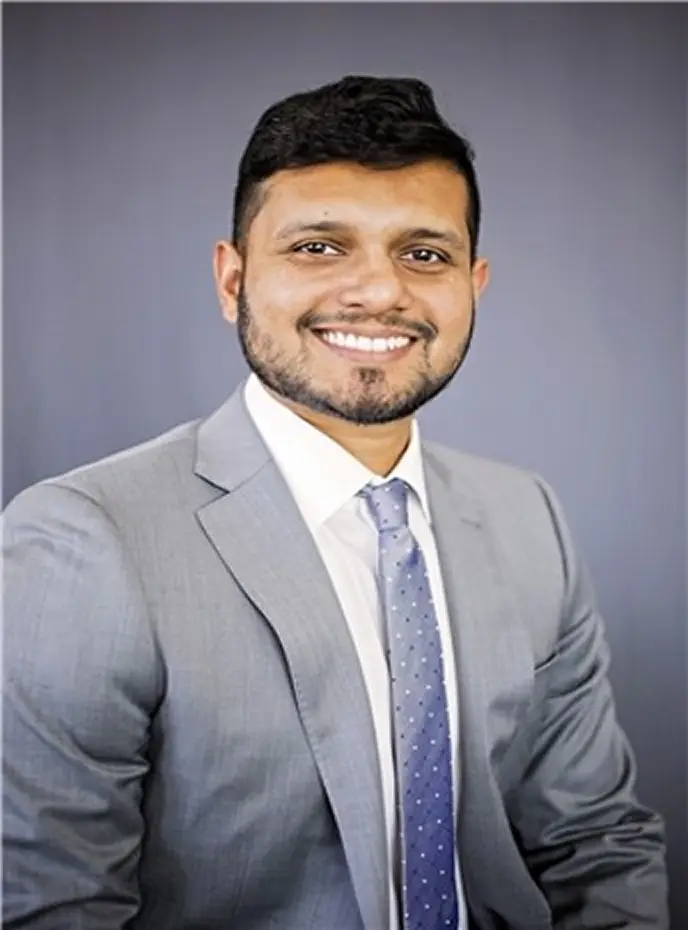
PMH STORY
The patient’s daughter called. Her mother had become ill with respiratory symptoms. I went by to visit her at her home. A COVID test was negative. An examination suggested an early or mild pneumonia and antibiotics were prescribed. However, as the afternoon went on, a fever developed and there was weakness, so the member was admitted to the hospital. At the hospital, COVID test was positive, and treatment was started.
Dr. Kelly visited the next day. Visiting a COVID patient, doctor and staff put on PPE – mask, gown, gloves, and face shield. I feel nearly anonymous in PPE. Properly gowned and masked, I went in to see the patient. We had visited often before, so I did not introduce myself. I said good morning, asked if any problems, asked her to lean to the side so I could listen to her lungs. I said, “Deep breath… thank you.” And then listened to her heart and checked for signs of recovery. As I was completing my exam, she said, “Are you Dr. Kelly?” The pattern of my exam, a voice still familiar though muffled by mask and face-shield prompted in her mind the recognition that this was Dr. Kelly, and not one of the many other doctors visiting in the hospital – it is often 5 or more.
It seemed to me that she recognized, behind layers of PPE, that this was someone she knew. I think this does good for the patient’s confidence and recovery. It was a reminder of how unrecognizable we are behind COVID personal protective equipment and how there is a benefit to seeing our doctor, our personal doctor in the hospital.
Robert H. Kelly, MD FACP
PMH STORY
“Thank you for seeing me today.” It is a common greeting in our PMH practice, where we have a commitment to being “not too busy.” The patient had called because she felt lightheaded after several days of a mild cough. We asked her to come to the office right away. We discovered infection with COVID and low blood pressure. The blood pressure responded well to oral hydration and the COVID infection was treated with antivirals. By the next day, the patient was feeling better and went on to an excellent recovery.
Increasingly, we recognize how difficult it is for people to see their own doctor for a same-day appointment. The president of the American College of Physicians, Isaac Opole, wrote a detailed essay this December 2024. He talks about a friend of his who “described in horrific detail how she almost lost her life,” because she could not make an appointment with any of her doctors. Though an internal medicine specialist herself, she was unsure of the meaning of her symptoms and was told that there was no available appointment with any of her doctors. The next day, feeling worse, she went to an emergency room, where she was found to have significant anemia along with congestive heart failure. Dr. Opole goes on to say, “the primary care machine is slowly, but certainly grinding to a halt. The doctor cannot see you now.” At PMH, we believe an internal medicine office should be run in such a fashion that the doctor can see you today. We plan to be able to say to patients who are ill and who would benefit from the same-day appointment that they can come to our office where the nurses and the doctor know them well and will welcome them. We believe this makes medical care better.
Dr. Opole and others are perplexed by how to improve availability of internal medicine care in a timely way. This is a problem that we have faced as well and our decision to embark on the PMH effort was motivated in part by the need to provide care in a timely and accessible way. We will continue our efforts in this regard. We hope that you will discover that if you need us, we are not too busy.
We know that emergencies can arise, and we may need to use urgent care or an emergency room. But our goal is to make this office available to you when you need it.
Allan R. Kelly, MD FACP
PMH STORY
A fine internal medicine doctor called to discuss a County Medical society issue with Dr. Kelly. She has had her own internal medicine practice in Tarrant County for decades and increasingly feels challenged and not sure what is going to happen with her practice. She feels like the world of internal medicine is closing. That is not why she called the office, but it is what she reflected on as she listened to the message on Dr. Kelly’s answering machine. She called around 5:00 on a Saturday, and she listened to the message, in my own voice, where I say, “If you did not get an answer at the office, please call my cell phone, 817-360-0408.” The cell phone was repeated, and the answering service number was given.
The internal medicine doctor told me that as she listened to the message, she was “dumbstruck.” She sat silent and tried to come to grips with what she had just heard. She heard a doctor share his cell phone number with any patient or family member who needed to talk to him. She heard a doctor who wanted to help a patient or a family who might have questions or concerns when the office is closed. She did not hear the phrases she is so familiar with: “If this is an emergency, hang up and call 911” or a long description of the office hours and telling people to call their pharmacy first and other instructions that we have become accustomed to. She called back and listened again, writing down the cell phone, and called me about the medical society issue.
She told me that she felt energized just to hear my message. She told me, “That is what I would like to do.” I encouraged her to think about it and let me know if I could help. We finished our business, and she said goodbye. This was my first time ever to actually talk to this colleague. Her reaction illustrates what we are doing here at Premium Medical Home. How do we make medical practice good and even beautiful to patients, families, and the doctor? How do we do a really good job so that our colleagues and our families can benefit?
We experience PMH stories every day. Direct contact, not too busy, professionalism, continuity of care, and affordability are amongst the many goals we set for our practices. We will continue to strive for those goals and to serve our patients and their families and our community as best we can.
Allan R. Kelly, MD FACP
DO “STRONGER” PAIN MEDICATIONS BEAT OVER-THE-COUNTER MEDICINES FOR PAIN RELIEF AND ARTHRITIS?
Over the past several years, there have been a number of randomized controlled trials looking at the effect of narcotics on osteoarthritic pain. A review of these trials appeared in “ARTHRITIS CARE AND RESEARCH.” It studied the effect of a narcotic, tramadol. Tramadol is reasonable and can be used with a doctor’s prescription. We used to look upon tramadol as a way of increasing pain relief options for our patients if over-the-counter medications were inadequate. We used to think that if the patient with osteoarthritis asked for “something stronger for my pain,” then a narcotic was the answer. This is likely not true. In this review of randomized controlled trials, there was no difference in pain relief with the narcotic medication tramadol, compared with over-the-counter medications. However, the incidence of adverse events was considerably higher with tramadol. Looking specifically at problems of osteoarthritis, randomized controlled trials do not show that narcotics give better pain relief for chronic osteoarthritic pain compared to over-the-counter meds. The presence of significant adverse events makes the narcotic unadvisable.
There are situations where acute pain syndromes, such as after an operation, benefit from the use of narcotic therapy. But for chronic pain disorders, the role of narcotics is growing smaller and smaller.
Allan R. Kelly, MD FACP
INDIGESTION
Indigestion is a common problem. It reflects the normal action of the body causing symptoms. It is characterized by symptoms such as feeling too full after a meal, having a decreased appetite, epigastric burning/discomfort, and present on a weekly basis for months. Symptoms should be reported if they are new, increasing in severity, or causing any alarm signs such as diarrhea, vomiting, fever, or signs of blood.
There are many options, both prescription and over the counter, help relieve functional dyspepsia or indigestion. First, Prilosec and famotidine can be helpful and should have an early role in self-care. Research studies have also looked at peppermint, caraway, turmeric, and Iberogast. Iberogast is a combination herbal formulation for IBS and bloating symptoms. Randomized studies have shown a 20% to 50% improvement in symptoms, not perfect answers, but for some, maybe a helpful remedy. Call or visit if symptoms trouble you.
Robert H. Kelly, MD FACP
SOCIAL MEDIA AND HEALTH
Research published in JAMA Pediatrics this year shows that there is harm from heavy use of social media. A metanalysis of 126 studies of social media use in teenagers demonstrated that frequent versus infrequent social media use was associated with increased alcohol consumption, drug use, tobacco use, sexual risk behaviors, and gambling. Cause and effect are not established, but the association causes worry. American Heart Association in 2013 documented an association with obesity. In 2023 the Surgeon General issued a report of the harmful effect of social media use on young people. American Journal of Psychiatry published a study in adolescents – 30 minutes social media use in adolescents correlated with reduced coping skills that became more severe as social media use increased to 180 minutes daily. Pediatric societies in the United States and the UK and the World Health Organization have developed guidelines on safe screen use, including limiting use, age-appropriate content, and discouraging isolation with the tablet. It appears that high early life digital media exposure can affect intellectual and psychosocial development in children. Average tablet/mobile device use in2020 was 5 minutes increasing to 55 minutes in 2022. A study in 2024 studied use(30minutes) at age 3.5 years and identified 22% increase in anger and frustration after one year of such tablet use by 3 1/2-year-olds.
Perhaps social media on tablets, phones, and computers distract attention from the real work of life. Conversations with our family, engagement in a community, skill development, time spent in ordinary play has potential for healthy coping and growth that entertainment does not have. We encourage adults and children to be alert to the adverse effects of social media.
Robert H. Kelly, MD FACP
QUOTES
It is no longer a secret that for many Americans it is …almost impossible to get a primary care appointment for a routine care in a reasonable amount of time.
Isaac Opole, MD, President, American College of Physicians, 2025
It is important to acknowledge that medicine is not just about procedures and tests, but also time, connecting with and listening to our patients. After decades of research, I think there are three traits that are essential for any physician: Listening to patients, humility, and curiosity.
Hardeep Singh, MD, 2024
I doubt that charting, coding, and billing are on the patient’s or the family’s mind.
Rachel Fleishman, MD, 2024
Being more active and eating better are associated with better surgical outcomes…I was surprised at the size of the benefits.
Daniel M. Isaac, MD, 2025
I am inspired by and grateful for the people who help, who bend rules to arrange an admission, or break rules to let a spouse shower in a hospital room. We need more of this, and I wish we needed none of it at all.
Heather Kovich, M.D., 2024
Life affords no greater responsibility, no greater privilege, then the raising of the next generation.
C Everette Koop, MD 1985
At its foundation, medicine is constituted by a particular kind of relationship, one based upon trust between a patient made vulnerable by illness and a doctor who professes to use his knowledge and skills always and only for the purpose of health and healing.
Aaron Kheriaty 2024
I admonish physicians, above all other considerations, to be honest. I mean honesty in every conception of the word: let it enter into all the details of your work.
William Mayo MD 1910
The object of all health education is to change the conduct of individual men, women, and children by teaching them to care for their bodies well.
Charles Mayo, 1932