
Fall 2013
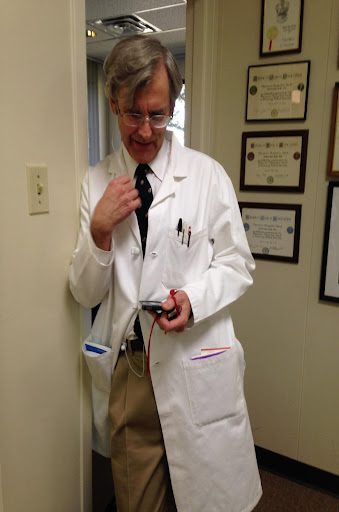
PMH STORY by Allan R. Kelly MD FACP
The elderly patient had not been seen for some time in the doctor’s office. He had three children. There had been no complaints from the patient, nor had the doctor received any calls from the family.
A call came in from the patient’s daughter who lived far away. She asked the doctor to call her back.
When time allowed, the doctor called. At first the daughter’s concerns seemed minor. She talked about her father’s weight gain and then his poor spirits after the death of the mother a year ago. But with time the daughter talked about other concerns. She recalled her father’s tremor and a fall months ago which had not been reported to the doctor. The patient and doctor visited the next day. With special attention to the fall, adjustments were made in medication and arrangements made for physical therapy to address imbalance and fall risk.
Allowing time for conversations like this results in better understanding. There is no way to predict what we will learn from a conversation. A doctor needs time to allow families to bring their concerns forward. In a practice driven by volume and billing codes, such time is hard to come by. In a practice where families communicate indirectly with the doctor through office staff, there is less opportunity for direct dialog.
In Premium Medical Home, we are committed to making time for family members to talk to the doctor. The doctor will, of course, respect the patient’s privacy. The relationship is direct: the patient or family talk directly to the physician when they feel the need. The number of patients is limited so that there is time to talk. This is a part of Premium Medical Home.
STATIN DRUGS MAY PREVENT DEMENTIA by Robert H. Kelly, MD, FACP
The FDA, in the last year, warned that statin drugs might be associated with memory problems. Are statin drugs bad for our brains? We don’t see such evidence.
For example, a recent study published in the Journal of the American Geriatric Society (2013, Volume 61) showed using statin drugs before Alzheimer’s disease develops may reduce the risks of developing Alzheimer’s.
SORE THROAT, COUGH, AND BRONCHITIS – WHAT TO DO? by Allan R. Kelly, MD, FACP
Most of us have had wintertime illnesses characterized by stuffiness, drainage, sore throat, and cough. For example, see the PMH Story in this newsletter. The majority of these illnesses will resolve spontaneously and antibiotics usually make no difference
There are things we can do. Websites can be informative (e.g., MayoClinic.com). For adults, over-the-counter medications can be helpful. Tylenol, zinc lozenges, and vitamin C have all been shown to be useful for some patients. Even the old home remedy of a teaspoon of honey reduces nighttime cough and discomfort. Prescription medicines also may slightly reduce symptoms.
FRAILTY by Robert H. Kelly, MD, FACP
As we age, our health changes. And there is a pattern – some are healthier and others are not. A syndrome of chronic poor health in the elderly is called frailty.
Frailty is a syndrome, a collection of symptoms and signs of illness of uncertain cause. The key elements of frailty are: loss of function in an activity of daily living, decreased strength or energy, unintended weight loss, and increased vulnerability, infection, and illness.
SHOULD I MEASURE MY OWN BLOOD PRESSURE? by Allan R. Kelly, MD, FACP
When high blood pressure is identified and treated, there is a substantial immediate and long-term reduction in the risk of stroke. Office measurement and treatment are the bedrock for the evaluation and management of hypertension.
Blood pressure can be easily measured in our homes. Blood pressure monitoring equipment is available in pharmacies and health clubs. Does self-monitoring of blood pressure further reduce the risk of stroke or heart attack compared to simple office measurement?
HEPATITIS C by Allan R. Kelly, MD, FACP
Hepatitis C is an uncommon but dangerous infection. Those who have had transfusions are at greater risk. It can result in problems including cirrhosis, liver cancer and death.
Hepatitis C spread throughout the world after the Second World War.
PMH FEES
New PMH fees will go into effect on January 1, 2014. The new fees are posted on our web site,www.PremiumMedicalHome.comand are also available by calling the office. As your PMH renewal becomes effective, you will be billed for the new 2014 fees.
PMH QUOTATIONS FALL 2013
“Our dean asked the medical students how many of them had been advised by at least one physician not to go into medicine; 80% of the students raised a hand.”
– Lawrence Hergott, MD ; “The View From Fiesole”JAMA, July 10, 2013; Page 147
“I have the distinct feeling that the patient in America is becoming invisible. She is unseen and unheard. . . I generally insist that we go to the bedside, but that is often the place where the team is no longer at ease. I realize what has happened: the patient in the bed is merely an icon for the real patient, who exists on the computer.”
– Abraham Verghese, MD; JAMA, July 17, 2013; Page 265
“To prevent disease, to relieve suffering, and to heal the sick – this is our work.”
– William Osler, MD