
Fall 2022
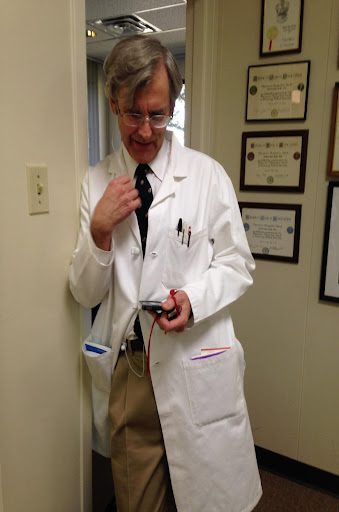
PMH STORY
The PMH member had a fall at home. He lives out of town. There were chronic medical issues that were stable on treatment. Dr. Kelly recommended X-Rays and an exam at a nearby urgent care center. Dr. Kelly asked the member to give me a call on arrival at the clinic. Upon arrival, he called and handed the phone to the clinic doctor. The doctor and I were acquainted and were able to exchange information about medical issues and plan for treatment for the injury. The patient was released.
Similirly, a patient’s family member called today. They were alarmed because the patient had been taken from a rehab center to a hospital south of Fort Worth. Family members were worried about the condition of their loved one.
This hospital is on Epic electronic record platform where Dr. Kelly has privileges, so Dr. Kelly was able to call up the data and bring the patient’s family up to date on the current events and status. This immediate information to the family helped them be aware and involved in events. This was reassuring and effective for continuing care.
It is both the availability of the doctor and access to information that is a benefit to PMH members and their families. Information may be available in other settings, but the doctor may not have time. Or the doctor may not know the patient and family. A call to many offices must work through layers of intermediaries – computer messages, nurses and on-call staff may have little insight to share. PMH’s direct and timely access to information and collaboration for planning is what patients and families want. PMH’s commitment to availability, being not too busy, makes a difference. This is what PMH offered to these two patients on one day in October. It is what we seek to offer every day that it is needed.
Robert H. Kelly, MD FACP
CAROTID ARTERY STENOSIS
Between 1995 and 2010, several studies were published concluding that the optimal treatment of asymptomatic carotid disease was surgical repair or endarterectomy. Endarterectomy carries an immediate risk of postoperative stroke in the order of 1% or more. These prior studies followed patients for 5 years and were randomized. The incidence of stroke was reduced in patients undergoing surgery.
A 2021 retrospective JAMA study looked at about 4,000 patients in Kaiser Permanente Northern California with severe carotid artery stenosis on one side, discovered on x-ray between 2008-2012. The patients were then followed through 2019 for incidence of stroke. The average age was 74, so the Kaiser patients were older. All-cause mortality from 1995 to 2019 was 55%, consistent with older age. Controlling for other issues, the 8-year risk of stroke was 2.7% even though no surgery was done.
The risks now are much lower than what was reported in surgical studies in the 1980’s and illustrate how medical treatment has changed the natural history of carotid stenosis. Treatment for asymptomatic carotid stenosis with statin drugs, blood pressure control, nonuse of tobacco, and metabolic control apparently reduces stroke risk to less than 3% over eight years of follow-up.
Robert H. Kelly, MD FACP
HALF EMPTY OR HALF FULL?
In 2021, The American Heart Association recommended addressing psychological health in its assessment and management of patients at risk for heart disease. Articles from 1995-2005 addressed the association between heart disease/mortality and optimism.
The data showed a 10 to 20% reduction in mortality and cardiovascular risk in persons objectively assessed as having an optimistic view of life, also called positive psychological health. Previous case reports and studies have documented adverse effects of anger/pessimism and health outcomes.
Benefits of optimism may relate to stress hormone response (e.g., cortisol and adrenalin). Some of the studies actually looked at the specific anatomic areas of brain function and blood levels of stress hormones — they found favorable correlation with positive attitude or Mood.
There is no pill that can instill optimism or psychological health. Or is that what a placebo does after all! But we might look at our responses in life and consider that a positive response may do our own health better than a negative response. And there is the impact on others. The reports on optimism are a reminder that mindset and choices can impact our health.
So, the analysis suggests that those with optimism have reduced mortality. Maybe it was just intuition – those with negative outlooks were aware that their health was not as good. Or maybe optimism has an effect on our underlying health. The data suggest that choosing a path of optimism and turning away from anger is good for your health.
Robert H. Kelly, MD FACP
HIGH-DOSE FLU VACCINE SAVES LIVES COMPARED TO LOWER-DOSE
The researchers studied a Danish vaccination program. In some parts of Denmark, both high-dose flu and regular dose flu vaccines were available, and in other parts of the country, only the regular flu vaccine was available. It was not a randomized trial with a placebo control but comparing groups in different parts of the country where different vaccines were available. Regions with the high-dose influenza compared to regions with only the standard influenza vaccine, showed a 49% reduction in the risk of death in the
subsequent flu season, and a 64% reduction in the risk of hospitalization for influenza or pneumonia. There was no significant difference in adverse events in the two groups. The Danish medical research establishment is leading the way with new insight into the use of influenza vaccine. We recommend influenza vaccine for our patients during flu season. There can be complications from flu vaccines. But looking at endpoints like death and hospitalization, flu vaccination is likely beneficial for elderly people. Get your flu shots in the fall.
Allan R. Kelly, M.D.
HOW TO PROTECT THE KIDNEYS? GO FOR A WALK
Preventative care is important. 1199 seniors were randomized into two groups. One group went to weekly workshops for 26 weeks looking at a variety of health topics relevant to older adults but not physical activity (exercise). The intervention group participants were expected to attend exercise sessions at a center twice weekly and encouraged to pursue home-based activities three or four times weekly throughout the trial. The exercise goal was to achieve 150 minutes of walking per week. Strength, flexibility, and balance training were done 10 minutes twice a week. Participants were asked to walk somewhat hard.
There was no difference in weight or blood pressure in the two groups. The exercise intervention group was significantly less likely to develop significant decline in kidney function. As a physician, I would not typically expect to see a change in kidney function based on randomization to an exercise group versus a non-exercise group. This observation adds to the benefits of encouraging exercise.
Prior research showed reduction in the risk of heart attack, stroke, and death compared to peers who are not instructed and encouraged to participate in exercise. Members can call the PMH office, and we will help set them up with exercise training at a medical type of facility, like Carter Rehab Center at Baylor All Saints. Or, if you are strong enough, a simple 20-minute walk every day will make you stronger.
Doctors wear many hats. I don’t know what we will think if doctors start carrying whistles around their neck!
Allan R. Kelly, MD, FACP
PMH STORY
At PMH, we put great value on continuity of care. We believe that it is meaningful to patients, their families, to doctors, and nurses to have continuity of care. How this affects different people was seen in a recent emergency room visit.
The PMH doctor was already in the emergency room seeing another patient. He received a call from a son of a woman I called Sarah for this story. The son reported that his mother had lost consciousness and the caregiver had called 911. The PMH doctor finished his work and headed for EMS triage, where the ambulances come into the ER. As he was walking to the end of the hall, he saw Sarah. Paramedics on either side were bringing the gurney down the hall. Well into her 90s, Sarah still recognized her doctor. She smiled. “Oh Dr. Kelly, it's so good to see you.” Dr. Kelly greeted her, and walked along with the paramedics, asking what happened and listening to her story. The nurse helped move the patient into the ER bed. While standing there, the paramedics turned to the doctor and gave a report of what they had found and measurements they had made. During this presentation, the ER doctor with scribe and a nurse walked up and listened. Dr. Kelly examined the patient and stepped out into the hall to talk to the emergency room doctor.
The ambulance crew followed and the older EMT said, “I’ve never seen this before in my life. I’ve never before seen a doctor who knew the patient and greeted the patient in the emergency room.” The EMT was impressed.
How about Dr. Kelly’s point of view? I can tell you; it is good to see a patient that I already know. I feel responsibility and compassion for my vulnerable and ill patient. So, whether it is the patient, the EMT, or the doctor, all see value in this continuity of care. Why is it uncommon? The emergency room used to be full of doctors seeing their own patients, patients they knew from their offices and prior hospitalizations. But, for the most part, those days are gone. In our work at PMH, we continue to value continuity of care in the office, the emergency room, hospital, or on the phone. We believe continuity of care is good for patients, families, and our colleagues.
Allan R. Kelly, MD FACP
QUOTES
It is a most gratifying sign of the rapid progress of our time that our best textbooks become antiquated so quickly.
Theodor Billroth, MD, 1872
It is believed that the medical professional finds this bedside telephone a great convenience to themselves and to their patients.
Ae Rockey, MD, 1922
Despite early successes in improving patient’s safety and hospital performance, outpatient metrics obligations have exploded without evidence of benefit. For though such efforts might identify people for whom we can meaningfully intervene, examining seemingly beneficial requirements in isolation risks overlooking the cumulative toll that check the box approach to medicine has taken on clinicians and patients.
Lisa Rosenbaum, MD, 2022
The hospital – when you spend so much time there – tends to breed an insular, almost provincial mindset. As we chase troponins and analyze pixelated MRIs, we too easily lose sight of the real stories, the ones that matter most to our patients, their families, their communities, and their shared human history.
Sneha Mantri, MD, 2022